Showing posts with label britpop. Show all posts

Thursday, June 16, 2011

MANIC STREET PREACHERS ***

Manic Street Preachers are an alternative rock band from Blackwood, Wales, formed in 1986. They are James Dean Bradfield (vocals, guitars), Nicky Wire (bass, occasional vocals) and Sean Moore (drums, backing vocals, occasional trumpet). The band are part of the Cardiff music scene, and was at its most prominent during the 1990s. They are colloquially known as 'The Manics' or 'Manics'.

The band were originally a quartet: lyricist and rhythm guitarist Richey Edwards vanished on 1 February 1995. In November 2008, thirteen years after his disappearance, he was officially declared presumed deceased.
The Manics released their debut album, Generation Terrorists in 1992. Their combination of androgynous glam punk imagery, outspoken invective and songs about "culture, alienation, boredom and despair" soon gained them a loyal following and cult status. The band's later albums retained a leftist politicisation and intellectual lyrical style, while adopting a broader alternative rock sound. Enigmatic lyricist Richey Edwards gained early notoriety by carving the words "4REAL" into his arm with a razor blade (narrowly missing an artery and requiring seventeen stitches) in response to the suggestion that the band were less than authentic. The dark nature of 1994's The Holy Bible reflected the culmination of Edwards' instability.
Following Edwards' disappearance, Bradfield, Moore, and Wire persisted with the Manic Street Preachers and went on to gain critical and commercial success, becoming one of Britain's premier rock bands. They have had eight top ten albums and fifteen top ten singles. They have reached number one three times, with their 1998 album, This Is My Truth Tell Me Yours and the singles "If You Tolerate This Your Children Will Be Next" (1998) and "The Masses Against the Classes" (2000). They have also won the Best British Album and Best British Group accolades at the BRIT Awards in 1997 and 1999, and were lauded by the NME for their lifetime achievements in 2008. Their ninth studio album, Journal for Plague Lovers, was released on 18 May 2009 and features lyrics Edwards had left behind to the band weeks before his disappearance.
Manic Street Preachers released their tenth studio album, Postcards from a Young Man, on 20 September 2010. It was preceded by the single "(It's Not War) Just the End of Love".

History

Formation and early years (1986–1991)

The band was formed in 1986 in Oakdale Comprehensive School, Blackwood, Gwent, Wales. During this time, Bradfield had tried writing lyrics, but this later changed and Wire wrote all their earliest lyrics, leaving Bradfield, alongside the classically-trained Sean Moore when he joined, to write the music. Original bassist Flicker (Miles Woodward) left the band in early 1988, reportedly because he believed that the band were moving away from their punk roots. The band continued as a three-piece, with Wire switching from guitar to bass, and in 1989 they recorded their first single, "Suicide Alley". Edwards joined the band on guitar and often made contributions to lyrics with Wire, designing record sleeves and other artwork, and driving the band to and from gigs.
In 1990, they signed a deal with label Damaged Goods Records for one EP. The four-track New Art Riot attracted as much media interest for its attacks on fellow musicians as for the actual music. With the help of Hall or Nothing management, the Manics signed to indie label Heavenly Records. The band recorded their first single for the label, entitled "Motown Junk".
The band released their next single, entitled You Love Us, and again displayed a huge cultural scope. The single sampled Penderecki's "Threnody to the Victims of Hiroshima" as well as Iggy Pop. The video featured Nicky Wire in drag as Marilyn Monroe and contained visual references to Betty Blue and Aleister Crowley. In a now legendary interview with then NME journalist Steve Lamacq, Edwards carved the phrase "4REAL" into his arm with a razor blade to prove their sincerity. He was taken to hospital and received a total of seventeen stitches. Columbia Records of Sony Music UK signed the band shortly afterwards and they began work on their debut album.

Generation Terrorists to The Holy Bible (1992–1995)

Their debut album, Generation Terrorists, was released on the Columbia Records imprint. The liner notes contained a literary quote for each of the album's eighteen songs and the album lasted just over seventy minutes. The record contained six singles and sold 250,000 copies.
The second album, Gold Against the Soul, was released to mixed reviews but still performed well, reaching number eight in the UK album chart and displayed a more grungy sound. The nature of the lyrics also changed, with Edwards and Wire eschewing their political fire for introspective melancholy.
By early 1994, Edwards' personal difficulties became worse and began to affect the other band members as well as himself. He was admitted into The Priory in 1994 to overcome his problems and the band played a few festivals as a three-piece to pay for his treatment.
The group's next album, The Holy Bible, was released in August to critical acclaim, but sold poorly. The album displayed yet another musical and aesthetic change for the band, largely featuring army/navy uniforms. Musically, the band had shifted to a lo-fi post-punk sound. In support of the album, the band appeared on Top of the Pops, performing its first single, "Faster", which reached No.16. The performance was extremely controversial at the time, as the band were all dressed in army regalia. Bradfield wore a 'terrorist-style' balaclava. At the time, the band was told by the BBC that they had received the most complaints ever.
Shortly after, on 1 February 1995, Edwards disappeared from the Embassy Hotel at Bayswater Road in London after checking out at 7:00 am. His car was found abandoned 17 February 1995 at the Severn View service station near the Severn Bridge, which has since acquired notoriety for being a suicide spot. A car park attendant reported it had been there for three days; police search of the car revealed that it had been lived in for a few days. Edwards was never seen again, although the band have kept a percentage of the royalties aside should he return. He was declared presumed dead on 28 November 2008 by his family. The band commented that they respect their decision. Manic Street Preachers was put on hold for six months and disbanding the group was seriously considered, but with the blessing of Edwards' family, the other members continued.

Everything Must Go to Know Your Enemy (1996–2003)

The first album without Edwards, Everything Must Go, contained five songs either written or co-written by Edwards, was released to overwhelmingly positive reviews. The bulk of the lyrics were written solely by Wire including number two hit single "A Design for Life". The album was shortlisted for the 1996 Mercury Prize award for best album, and won the band two BRIT AwardsAustralia", "Everything Must Go" and "Kevin Carter". for Best British Band and Best British album, as well as yielding the hit singles "
1998's This Is My Truth Tell Me Yours was just as successful across most of the world, and gave the band their first number one single in "If You Tolerate This Your Children Will Be Next". It was written about the Spanish Civil War and was inspired in equal parts by George Orwell's Homage to Catalonia and The Clash's "Spanish Bombs". The album also included the hit singles "You Stole the Sun from My Heart", "Tsunami" and "The Everlasting". Again the Manics won the Best British Band and album awards at the BRIT Awards in 1999.
On 31 December 1999 they played at the 'Leaving the 20th Century concert' in the Millennium Stadium in Cardiff, the first and biggest ever concert to be held there with 80,000 people attending.
In 2000 they released the limited edition single "The Masses Against the Classes". Despite receiving little promotion, the single hit the number one position on the UK Singles chart, beating U Know What's Up by Donell Jones to the top. The catalogue entry for the single was deleted (removed from wholesale supply) on the day of release, but the song nevertheless spent seven weeks in the UK chart.
In 2001 they became the first popular western rock band to play in Cuba, (at the Karl Marx Theater) and met with president Fidel Castro. Their concert and trip to Cuba was documented and then released as a DVD entitled Louder than War.
In this concert they revealed many tracks from their sixth album Know Your Enemy. The song "Ocean Spray" was written by James about his mother's battle with cancer. The first singles from the album, "So Why So Sad" and "Found That Soul", were both released on the same day. Other singles included "Let Robeson Sing".
The greatest hits (plus remixes) album Forever Delayed was released in 2002, containing two new songs, "Door to the River" and the single "There by the Grace of God". An album of B-sides, rarities, and cover versions album was released in 2003: Lipstick Traces, which contained the last song worked on with Edwards.

Lifeblood to Journal for Plague Lovers (2004–2009)

The band's seventh studio album, Lifeblood, was released on 1 November 2004 and reached #13 on the UK album chart. Critical response to the album was mixed. Tony Visconti helped the band produce three songs on the album, which was followed by a UK arena tour in December 2004. A tenth anniversary edition of The Holy Bible was released on 6 December 2004, which included a digitally remastered version of the original album, a rare U.S. mix and a DVD of live performances and extras including a band interview.
In April 2005, the band played a number of shows as the Past-Present-Future tour — announced as their last for at least two years. The band released an EP entitled God Save the Manics with only around 300 copies available and given out to fans as they arrived at the venue. After all the copies were gone, the band made the EP available as a free download on their website. In September, the band contributed the new track, "Leviathan", to the War Child charity album Help-a Day in the Life.
The band's eighth studio album, Send Away the Tigers was released on 7 May 2007 on Columbia Records. It entered the official UK album charts at #2. Critical response to the album was largely positive, with some critics hailing the album as the band's best for a decade. A free download of a song entitled "Underdogs" from the album was made available through the group's website on 19 March 2007. The first official single released from Send Away the TigersYour Love Alone Is Not Enough", which features The Cardigans' vocalist, Nina Persson. The second single, "Autumnsong", and a third, "Indian Summer", were released in August. was "
The band released a Christmas single in December. "Ghost of Christmas" was available as a free download on their official website throughout December 2007 and January 2008. In February 2008, the band were presented with the God-Like Geniuses Award award at the NME Awards ceremony.
The ninth Manics album, Journal for Plague Lovers, was released on 18 May 2009 and features lyrics left behind by Edwards. Wire commented in an interview that "there was a sense of responsibility to do his words justice." The album was released to positive critical reviews, scoring 85 on Metacritic.

Postcards from a Young Man (2010–present)

On 1 June 2010 the band announced on their homepage that a new album called Postcards from a Young Man will be released on 20 September 2010. James Dean Bradfield said that the album would be an unashamedly pop-orientated affair following 2009's Journal for Plague Lovers. "We're going for big radio hits on this one," he told NME. "It isn't a follow-up to Journal for Plague Lovers. It's one last shot at mass communication."
On 26 July 2010 the first single from the new album, "(It's Not War) Just the End of Love", was played on the breakfast shows of BBC Radio 2, BBC 6Music, XFm and Absolute Radio. It was released on 13 September 2010. The title had previously been suggested as a working title for the album by Nicky Wire. Three collaborations were also confirmed on the band's website later that day: Duff McKagan will appear on "A Billion Balconies Facing the Sun", Ian McCulloch adds guest vocals to "Some Kind of Nothingness" and John Cale will feature on "Auto-Intoxication".British Sea Power were the support act for the band on the tour. Two further singles have been released from the album - the McCulloch featuring Some Kind of Nothingness and the title track Postcards From A Young Man. The band embarked on a UK tour to promote the album, starting in Glasgow on 29 September 2010.
The band have announced that their next album has the working title '70 Songs Of Hatred And Failure' and will sound very different from Postcards From A Young Man. "The next album will be pure indulgence. There’s only so much melody stored in your body that you can physically get onto one record. It was just so utterly commercial and melodic."

Solo work

In late 2005, both Bradfield and Wire announced that they intended to release solo material prior to a new album by the band. A free download of Nicky Wire's debut solo offering I Killed The Zeitgeist was posted on the band's website for just one day - Christmas Day 2005. The album of the same name was released in September 2006. It charted at #130 in the UK. The sound of the album, which Nicky referred to as his "nihilistic anti-everything album", was inspired by, among others, Neu!, The Plastic Ono Band, Einstürzende Neubauten, The Modern Lovers, Richard Thompson and Lou Reed. Only one official single was released: "Break My Heart Slowly" charted at #74. Nicky toured small intimate venues across the UK with his band The Secret Society, affording fans the opportunity of seeing their hero at close quarters.
Bradfield's solo album, The Great Western was released in July 2006. It reached #22 in the UK. The sound of the album was inspired by, among others, Jeff Beck, Badfinger, Simple Minds and McCarthy. Two singles were released: "That's No Way to Tell a Lie" (#18) in July and then "An English Gentleman" (#31) in September. The latter is in remembrance of the first Manic's manager Philip Hall, to whom The Holy Bible had been dedicated. James toured the album with a band that included Wayne Murray, who would subsequently play second guitar for Manics live performances. James' solo gigs featured covers of The Clash songs "Clampdown" and "The Card Cheat", both from the album London Calling.
In a later interview, when the band were collectively asked what they had learned from making a solo album, Sean Moore dryly quipped, "Not to do one".

Collaborations and covers

The band released in 1992 a split single with Fatima Mansions (a rock cover of "Suicide Is Painless") which became their first UK Top 10 hit. They have recorded many cover versions of songs by other artists, primarily as b-sides for their own singles. Bands to whom the group have paid tribute in this way include The Clash, Guns N' Roses, Alice Cooper, Happy Mondays, McCarthy, Chuck Berry, Faces, and Nirvana.
The band's first musical appearance since Edwards' departure was recording a cover of "Raindrops Keep Falling on My Head" for The Help Album, a charity effort in 1995 in support of aid efforts in war-torn Bosnia and Herzegovina.
The Lightning Seeds' song "Waiting for Today to Happen", from their fifth album, Dizzy HeightsNicky Wire and Ian Broudie. That same year, James Dean Bradfield and Dave Eringa produced Northern Uproar's first single, "Rollercoaster/Rough Boys". The 808 State song "Lopez" (1997) features lyrics by Wire and vocals by Bradfield. It is featured on their greatest hits album, 808:88:98. Kylie Minogue's sixth album, Impossible Princess (1997), features two songs co-written and produced by the Manics: "Some Kind of Bliss" (Bradfield/Minogue/Moore) and "I Don't Need Anyone" (Bradfield/Jones/Minogue) were produced by Bradfield and Dave Eringa. Bradfield provided backing vocals, bass and production for the Massive Attack song "Inertia Creeps" (1998), which features on their successful third album, Mezzanine. Patrick Jones' album of poetry set to music, Commemoration And Amnesia (1999), features two songs with music written by Bradfield: the title track and "The Guerilla Tapestry". Bradfield plays guitar on both songs. Furthermore, the track "Hireath" features a section called "Spoken Word", in which Nicky Wire talks about Welsh identity. (1996), was written by
In February 2006, the band contributed a cover version of "The Instrumental" to the album Still Unravished: A Tribute to the June Brides.
In February 2008 the Manics covered Rihanna's hit song "Umbrella". Their version appeared on a CD titled NME Awards 2008 given away free with a special souvenir box set issue of NMEiTunes since 5 March 2008. Despite being chart-eligible (it reached number 47 in the UK), the release was not intended as an official single. Two further versions (Acoustic and Grand Slam Mix) were later made available on iTunes and now comprise a three-track Umbrella EP. magazine, which went on sale 27 February. Additionally, the Manics' version of the song was made available on
James Dean Bradfield and Nicky Wire contributed an original song, "The Girl from Tiger Bay", to Shirley Bassey's 2009 studio album, The Performance.

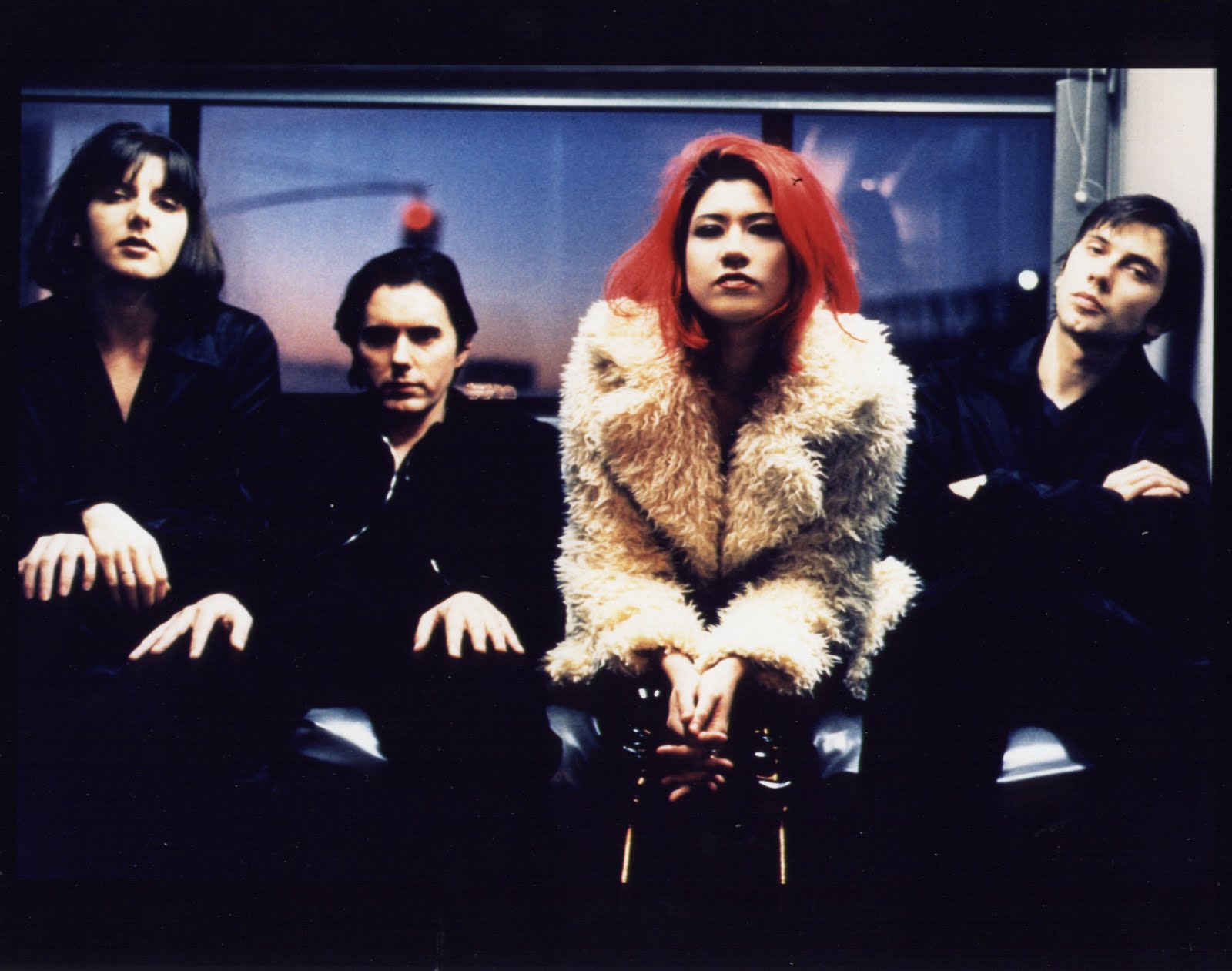
LUSH ***


Lush were an English alternative rock band, formed in 1987 and disbanded in 1998. They were one of the first bands to attract the "shoegazing" label, later moving toward Britpop.


History

The band formed in 1987, initially named The Baby Machines, with a line-up of Meriel BarhamEmma Anderson (guitar), Miki Berenyi (guitar), Steve Rippon (bass), and Chris Acland Anderson and Berenyi had been friends since the early 1980s, and published the Alphabet Soup fanzine together. In 1986 Anderson joined The Rover Girls as bassist and Berenyi joined The Bugs as guitarist; neither band lasted long, and in 1987 they joined Barham and Acland in The Baby Machines. Rippon joined shortly thereafter, and the band members decided on a change of name to Lush, making their live debut at the Camden Falcon on March 6, 1988. Barham was fired, with the rest of the band deciding she lacked commitment (she later joined Pale Saints). Anderson and Berenyi then took on lead vocal duties.
Emma Anderson said of the band's beginnings: "We were kind of punk rock in one way. We did think 'Well, if they can do it, why the fuck can't we?' Basically, our idea was to have extremely loud guitars with much weaker vocals. And, really, the vocals were weaker due to nervousness - we'd always be going 'Turn them down! Turn them down!'" Miki Berenyi said, "We started by writing crappy riot grrl anthems... which was probably charming in a juvenile way. But there was a very rapid shift from the minute we started to write for records. The music, the lyrics became much more thoughtful and expressive, more important, really. I remember that change beginning when Emma wrote "Thoughtforms," it certainly made me think I needed to get my act together."
In 1989, the band signed to 4AD Records and released Scar, a 6-track mini-album. Critical praise for Scar and a wildly popular live show established Lush as one of the most written about groups of the early 1990s UK indie scene. Anderson told Everett True in Melody Maker, "I remember when I couldn't play, I wasn't in a band, didn't know anyone else who could play, and now we've got a record out on 4AD. I sometimes find it impossible to come to terms with what's happening."
Not long after, the British music press tagged them with the "shoegazing" label. The following year, the EP Mad Love (produced by Robin Guthrie of Cocteau Twins) and the single "Sweetness and Light" (produced by Tim Friese-Greene) were released. All three releases were eventually combined into the Gala compilation album which was produced mainly for the US and Japanese markets. The band recorded a live session for John Peel's BBC Radio 1cover version of "Chirpy Chirpy Cheep Cheep" to the anti-poll tax album Alvin Lives (in Leeds). show in 1990 and contributed a
The band's profile was raised by extensive touring, including an appearance at the Glastonbury Festival and tours of Japan and the United States (with Ride). Lush's first full-length album of completely new material was Spooky, released in January 1992. Again produced by Guthrie, Spooky featured a sound very similar to Guthrie's band Cocteau Twins, with walls of sound and a great deal of guitar effects. Reviews were mixed and critics of the album hold that Guthrie's production brought the sound away from the band's original creative vision; although the album sold well, reaching number 7 in the UK Albums Chart. The album was preceded by the band's first UK top 40 single, "For Love." Rippon left the band during the final mixing of the album in order to concentrate on writing, though his book Cold Turkey Sandwich—a fictionalized chronicle of his time touring—was rejected by publishers. He was replaced by Phil King. Also in 1992, Lush toured America as part of the Lollapalooza festival. Lush was eagerly added to the inaugural Lollapalooza roster in 1992 by its organizer, Perry Farrell, the Jane's Addiction/Porno for Pyros frontman, who personally requested Lush for his new tour program.
Lush approached Bob Mould to produce their second album, but it didn't work out. (Stories differ here: the band stated that Mould was too busy to produce them, but Mould said in a Spin Magazine article that he backed out because "I kept picking the wrong girl's songs... I had to get out before I broke up the band!") Split, produced by the band with Mike Hedges and mixed by Alan Moulder, was released in June 1994 and featured a more stripped-down sound. Split was not as successful as Spooky, however. Two singles from the album ("Hypocrite" and "Desire Lines") were both released on 30 May 1994, making Lush the first band ever to release two different singles on the very same day, though neither single broke into the UK Top 40. The band concentrated on the American market, under the advice of their management, but failed to make a breakthrough there; they suffered further setbacks when tours of Japan and the UK were canceled. They decided to break from their management and begin work on a new album. 1996's Lovelife, the band's final album, became the biggest seller of their career as it was released on the heels of the Britpop craze, possibly due to a more upbeat production style than their earlier releases. Lovelife included the hit singles "Ladykillers" and "Single Girl," and also featured a guest appearance by Jarvis Cocker of Pulp, in a duet with Miki Berenyi on the song "Ciao!"
In October 1996, tragedy struck the band when drummer Chris Acland committed suicide by hanging himself in his parents' house. After a long period of grieving, the band continued for a time, with rumours that they were working with former Scarce drummer Stephen Albert, but the band officially announced that they had split up on 23 February 1998.

Post break-up

Miki Berenyi went on to work as senior sub-editor at a major magazine publisher. In 1998, Emma Anderson formed a new group, Sing-Sing, with singer Lisa O'Neill. Sing-Sing released two full-length albums but in January 2008, announced they were disbanding. Emma Anderson currently resides in London and has had various jobs in the music business in management, PR and at a booking agency. Bassist Phil King played bass for The Jesus and Mary Chain but now works on a music magazine as a picture researcher.
Lush's version of The Rubinoos song, "I Wanna Be Your Boyfriend," (retitled "I Wanna Be Your Girlfriend" for Lush's authorized version) was cited in a 2007 lawsuit filed by the Rubinoos against Avril Lavigne, whose song "Girlfriend" bore similarities to the Lush cover of the Rubinoos song. A settlement in the case has since been reached.

Wednesday, June 15, 2011

BLUR ***

Blur are an English alternative rock band. Formed in London in 1989 as Seymour, the group consists of singer Damon Albarn, guitarist Graham Coxon, bassist Alex James and drummer Dave Rowntree. Blur's debut album Leisure (1991) incorporated the sounds of Madchester and shoegazing. Following a stylistic change—influenced by English guitar pop groups such as The Kinks, The Beatles and XTC—Blur released Modern Life Is Rubbish (1993), Parklife (1994) and The Great Escape (1995). As a result, the band helped to popularise the Britpop genre and achieved mass popularity in the UK, aided by a famous chart battle with rival band OasisThe Battle of Britpop". dubbed "

In recording their follow-up, Blur (1997), the band underwent another reinvention, showing influence from the lo-fi style of American indie rock groups. "Song 2", one of the album's singles, brought Blur mainstream success in the US. The last album featuring Blur's original lineup, 13electronic music and gospel music, as Albarn wrote more personal lyrics. In May 2002, Coxon left Blur during the recording of their seventh album Think Tank (2003). Containing electronic sounds and more minimal guitar work, the album was marked by Albarn's growing interest in hip hop and African music. After a 2003 tour without Coxon, Blur did no studio work or touring as a band, as members engaged in other projects. In 2009 Blur reunited, with Coxon back in the fold, for a series of successful concerts. (1999) found the band members experimenting with

History

Formation and Leisure: 1988–1991

Childhood friends Damon Albarn and Graham Coxon met Alex James when they began studying at London's Goldsmiths College in 1988. Albarn was in a group named Circus, who were joined by drummer Dave Rowntree that October. Circus requested the services of Coxon after the departure of their guitarist. That December Circus fired two members and James joined as the group's bassist. This new group named themselves Seymour in December 1988, inspired by J.D. Salinger's Seymour: An Introduction. Seymour performed live for the first time in summer 1989. In November, Food Records' A&R man Andy Ross attended a Seymour performance that convinced him to court the group for his label. 
The only concern held by Ross and Food was that they disliked the band's name. Food drew up a list of alternative names, from which the band decided on "Blur". Food Records finally signed the newly christened Blur in March 1990.
From March to July 1990, Blur toured the UK, opening for The Cramps, and testing out new songs. In October 1990, after their tour was over, Blur released the "She's So High" single, which reached number 48 in the UK Singles Chart. The band had trouble creating a follow-up single, but they made progress when paired with producer Stephen Street. The resulting single release, "There's No Other Way", became a hit, peaking at number eight. As a result of the single's success, Blur became pop stars and were accepted into a clique of bands who frequented The Syndrome club in London dubbed "The Scene That Celebrates Itself". NME magazine wrote in 1991, "[Blur] are [the] acceptable pretty face of a whole clump of bands that have emerged since the whole Manchester thing started to run out of steam."
The band's third single, "Bang", performed relatively disappointingly, reaching only number 24.David Balfe were convinced Blur's best course of action was to continue drawing influence from the Madchester genre. Blur attempted to expand their musical sound, but the recording of the group's debut album was hindered by Albarn having to write his lyrics in the studio. Although the resulting album Leisure (1991) peaked at number seven on the UK Albums Chart, it received mixed reviews, and according to journalist John Harris, "could not shake off the odour of anti-climax". Andy Ross and Food owner

Britpop years: 1992–1995

After discovering they were £60,000 in debt, Blur toured the United States in 1992 in an attempt to recoup their financial losses. The group released the single "Popscene" to coincide with the start of the tour. Featuring "a rush of punk guitars, '60s pop hooks, blaring British horns, controlled fury, and postmodern humor", "Popscene" was a turning point for the band musically.NME in 1993, "But that annoyed a lot of people ... We put ourselves out on a limb to pursue this English ideal and no-one was interested." As a result of the single's lacklustre performance, plans to release a single named "Never Clever" were scrapped and work on Blur's second album was pushed back. However, upon its release it only charted at number 32. "We felt 'Popscene' was a big departure; a very, very English record," Albarn told the
During the two-month American tour, the band became increasingly unhappy, often venting frustrations on each other, leading to several physical confrontations. The band members were homesick; Albarn said, "I just started to miss really simple things ... I missed everything about England so I started writing songs which created an English atmosphere." Upon the group's return to the United Kingdom, Blur (Albarn in particular) were upset by the success rival group Suede had achieved while they were gone. After a poor performance at a 1992 gig that featured a well-received performance by Suede on the same bill, Blur were in danger of being dropped by Food. By that time, Blur had undergone an ideological and image shift intended to celebrate their British heritage in contrast to the popularity of American grunge bands like Nirvana.Andy Partridge of the band XTC to produce their follow-up to Leisure. The sessions with Partridge proved unsatisfactory, and were abandoned after only three songs, but a chance reunion with Stephen Street resulted in him returning to produce the group. Although sceptical of Albarn's new manifesto for the band, Balfe gave assent for the band's choice of
The band completed their second album Modern Life Is Rubbish in December 1992, but Food Records said the album required more potential hit singles and asked them to return to the studio for a second time. The band complied and Albarn wrote "For Tomorrow", which became the album's lead single. "For Tomorrow" was a minor success, reaching number 28 on the charts. Modern Life Is Rubbish was released in May 1993. The announcement of the album's release included a press photo featuring the phrase "British Image 1" spraypainted behind the band (who were dressed in a mixture of mod and skinhead attire) and a mastiff-breed dog. At the time, such imagery was viewed as nationalistic and racially insensitive by the British music press; to quiet concerns, Blur subsequently released the "British Image 2" photo, which was "a camp restaging of a pre-war aristocratic tea party". Modern Life Is Rubbish peaked at number 15 on the British charts, yet it did not make much of an impression in the U.S.
The success of Parklife (1994) revived Blur's commercial fortunes. The album's first single, the disco-influenced "Girls & Boys", found favour on BBC Radio 1. It peaked at number five on the UK singles chart and number four on the US Modern Rock chart, where it remains the band's highest-charting single to date. Parklife entered the British charts at number one and stayed on the album charts for 90 weeks. Enthusiastically greeted by the music press—the NME called it "a Great Pop Record ... bigger, bolder, narkier and funnier [than Modern Life is Rubbish]"—Parklife is regarded as one of Britpop's defining records. The album generated further hit singles, including the ballad "To the End" and the mod anthem "Parklife". Blur won four awards at the 1995 BRIT Awards, including Best Band and Best Album for Parklife. Coxon later pointed to Parklife as the moment when "[Blur] went from being regarded as an alternative, left field arty band to this amazing new pop sensation".
Blur began working on their fourth album The Great Escape at the start of 1995. Building upon the band's previous two albums, Albarn's lyrics for the album consisted of several third-person narratives. James reflected, "It was all more elaborate, more orchestral, more theatrical, and the lyrics were even more twisted ... It was all dysfunctional, misfit characters fucking up." The release of the album's lead single "Country House" played a part in Blur's public rivalry with Manchester band Oasis termed "The Battle of Britpop". Partly due to increasing antagonisms between the groups, Blur and Oasis ultimately decided to release their new singles on the same day, an event the NME called "The British Heavyweight Championship". The debate over which band would top the British singles chart became a media phenomenon, and Albarn appeared on the News at Ten. At the end of the week, "Country House" ultimately outsold Oasis' "Roll With It" by 274,000 copies to 216,000, becoming Blur's first number one single.
The Great Escape was released in September 1995 to rapturous reviews, and entered the UK charts at number one. The NME hailed it as "spectacularly accomplished, sumptuous, heart-stopping and inspirational". However, opinion quickly changed and Blur found themselves largely out of favour with the media once again. Following the worldwide success of Oasis' (What's the Story) Morning Glory? (which went quadruple platinum in America), the media quipped that "[Blur] wound up winning the battle but losing the war." Blur became perceived as an "inauthentic middle class pop band" in comparison to the "working class heroes" Oasis, which Albarn said made him feel "stupid and confused". Bassist Alex James later summarised, "After being the People's Hero, Damon was the People's Prick for a short period ... basically, he was a loser – very publicly."

Reinvention after Britpop: 1996–2000

An early 1996 Q magazine interview revealed that relations between Blur members had become very strained; journalist Adrian Deevoy wrote that he "[found] them on the verge of a nervous breakup". Coxon, in particular, began to resent his band mates; James for his playboy lifestyle, and Albarn for his control over Blur's musical direction and public image. The guitarist struggled with drinking problems and, in a rejection of the group's Britpop aesthetic, made a point of listening to noisy American alternative rock bands such as Pavement. In February 1996, when Coxon and James were absent for a lip-synced Blur performance broadcast on Italian television, they were replaced by a cardboard cutout and a roadie, respectively. Blur biographer Stuart Maconie later wrote that, at the time, "Blur were sewn together very awkwardly".
Although he had previously dismissed it, Albarn grew to appreciate Coxon's tastes in lo-fi and underground music, and recognised the need to significantly change Blur's musical direction once again. "I can sit at my piano and write brilliant observational pop songs all day long but you've got to move on", he said. He subsequently approached Street, and argued for a more stripped-down sound on the band's next record. Coxon, recognising his own personal need to—as Rowntree put it—"work this band", wrote a letter to Albarn, describing his desire for their music "to scare people again". After initial sessions in London, the band left to record the rest of the album in Iceland, away from the Britpop scene.
The result was Blur, the band's fifth studio album, released in February 1997. Although the music press predicted that the lo-fi sonic experimentation would alienate Blur's teenage girl fan-base, they generally applauded the effort. Pointing out lyrics such as "Look inside America/ She's alright", and noting Albarn's "obligatory nod to Beck, [and promotion of] the new Pavement album as if paid to do so", reviewers felt the band had come to accept American values during this time—an about-face of their attitude during the Britpop years. Despite cries of "commercial suicide", the album and its first single, "Beetlebum", debuted at number one in the UK. Although the album could not match the sales of their previous albums in the UK, Blur In the US, the record received strong reviews as the album and the "Song 2" single became a hit. Blur reached number 61 on the Billboard 200 and was certified gold, while "Song 2" peaked at number six on the Modern Rock chart. After "Song 2" was licensed for use in various media—such as soundtracks, advertisements and television shows—it became the most-recognisable Blur song in the US. After the success of Blur, the band embarked on a nine-month world tour. became the band's most successful internationally.
In February 1998, a few months after completing the tour, Blur released Bustin' + Dronin' for the Japanese market. The album is a collection of Blur songs remixed by artists such as Thurston Moore, William Orbit and Moby. Among the tracks, the band were most impressed by Orbit's effort and enlisted him to replace Street as producer for their next album, citing a need to approach the recording process from a fresh perspective. Recording sessions for the upcoming album began in June 1998, and in August of that year, Coxon released his debut solo album, The Sky is Too High on his own label, Transcopic Records.
Released in March 1999, Blur's sixth studio album 13 saw them drift still further away from their Britpop-era attitude and sound. Orbit's production style allowed for more jamming, and incorporated a "variety of emotions, atmospheres, words and sounds" into the mix. 13 was creatively dominated by Coxon, who "was simply allowed to do whatever he chose, unedited", by Orbit. Albarn's lyrics—more heart-felt, personal and intimate than on previous occasions—were reflective of his break-up with Elastica frontwoman Justine Frischmann, his partner of eight years. The album received generally favourable reviews from the press. While Qart rock album", the NME felt it was inconsistent and "(at least) a quarter-of-an-hour too long". 13 debuted at the top of the UK charts, staying at that position for two weeks. The album's lead single, the gospel-based "Tender", opened at the second spot on the charts. After "Coffee & TV", the first Blur single to feature Coxon on lead vocals, managed to only reach number 11 in the UK, manager Chris Morrison demanded a chart re-run because of what he deemed was a sales miscalculation. called it "a dense, fascinating, idiosyncratic and accomplished
In July 1999, in celebration of their tenth anniversary, Blur released a 22-CD limited edition box-set of their singles. The accompanying tour in December saw Blur play the A-sides of the 22 singles (in their chronological order of release) at every show. In October 2000, the group released the best-of album Blur: The Best of, which debuted at number three in the UK.Blur: The Best of were determined on the basis of market research and focus groups conducted by Blur's record label, EMI. By this time, the group had largely disowned the upbeat pop singles from the Britpop era, and favoured the more arty, experimental work on Blur13. In an otherwise highly enthusiastic review of the best-of for the NME, Steve Sutherland criticised the band's "sheer disregard" for their earlier work; "Just because these songs embarrassed them once they started listening to broadsheet critics and retreated wounded from the big-sales battle with Oasis doesn't mean that we're morons to love them." Dismissed by the band as "the first record we have seen as product", the tracklisting and release dates of and

Coxon's departure, Think Tank, hiatus and reunion: 2001–present

After 13 and the subsequent tour in 1999, the band entered into a hiatus, during which bandmembers pursued other projects. Graham Coxon recorded a string of solo albums, while Damon Albarn created the animated band Gorillaz with Jamie Hewlett. Alex James worked with Fat Les and co-wrote several songs with Sophie Ellis-Bextor and Marianne Faithfull.
Early in 2002, Blur temporarily broke its hiatus to record a song that would be played for the European Space Agency's Mars Lander; however, the plan fell through when the lander was lost.Marrakesh, Morocco in mid-2002. Tensions surfaced, however, when Coxon began to appear emotionally and creatively distant to his band mates, reportedly failing to attend recording sessions. Two of the main causes for this have been cited as the choice of dance DJ Fatboy Slim as the album's producer and also Coxon's alleged alcohol problems. After several weeks of uncertainty, Coxon confirmed that he had been asked to leave the band for reasons connected with his "attitude". His last contribution to the band was a guitar line on the final track of Think Tank, "Battery in Your Leg" which Albarn said was the only song he ever wrote about the band. Before the album was released, Blur released a new single, "Don't Bomb When You Are the Bomb" as a very limited white label release. A largely electronic song, sporting a chorus consisting of "Don't bomb when you're the bomb-ba-bomb-bomb-bomb", the single and the band's startling reinvention was a shock to Blur fans, who were expecting a return to the catchy pop tunes of the band's early career. Albarn, however, attempted to assuage fans' fears by explaining the impetus behind the song and providing reassurances that the band's new album would be a return to their roots. Recording for Blur's next album got under way in
Think Tank, released in May 2003, was filled with atmospheric, brooding electronic sounds, featuring simpler guitar lines played by Albarn, and largely relying on other instruments to replace Coxon. Coxon's absence also meant that Think Tank was almost entirely written by Albarn. Its sound was seen as a testament to Albarn's increasing interest in African music, Middle Eastern music and electronic music, and to his complete control over the group's creative direction. Think Tank was yet another UK number one and managed Blur's highest US position of number 56. The album was also nominated for best album at the 2004 BRIT Awards. The band supported the album with a tour and three singles: "Out of Time", "Crazy Beat" and "Good Song".
In early 2004, the band announced, through XFM news, that they would be recording an EP, and there were also rumours that Coxon would return to Blur. Both of the rumours proved untrue. There were also some aborted recordings done in 2005. After Coxon significantly thawed about rejoining the band, James announced in April and August 2007 that the band would reunite and would likely be recording a new album in October.
In December 2008, Albarn and Coxon stated that Blur would reunite for a concert at Hyde Park A series of June preview shows were also announced, ending at Manchester Evening News arena on the 26th. All the shows were well received; The Guardian's music critic Alexis Petridis gave their performance at Goldsmiths college five stars out of five, and wrote that "Blur's music seems to have potentiated by the passing of years ... they sound both more frenetic and punky and more nuanced and exploratory than they did at the height of their fame". Blur headlined the Glastonbury Festival on 28 June, where they played for the first time since their headline slot in 1998. Reviews of the Glastonbury performance were enthusiastic, The Guardian called them "the best Glastonbury headliners in an age". on 3 July 2009, but after tickets for the concert sold out within 2 minutes of release, Blur announced an additional performance at Hyde Park on 2 July 2009.
Blur also headlined at other summer festivals, including Oxegen 2009 in Ireland, and the Scottish outdoor show of T in the Park. Their T in the Park headline slot was put in jeopardy after Graham Coxon was admitted to hospital with food poisoning. Ultimately, the band did play, albeit an hour and a half after they were scheduled to appear. As stated by Damon Albarn during the performance, and covered by the press, this would be their final performance. Alex James also stated that the band currently had no plans to continue their reunion. Albarn followed up these comments in July 2009 by stating that the band's summer dates were all the band would be doing together, and the reunion was over. In September 2009, Coxon stated that Blur have no immediate plans for either entering the studio or playing more shows. In January 2010, No Distance Left to Run, a documentary about the band, was released in cinemas and a month later on DVD region free. In November 2009, Blur were the first act to be recognised with a Heritage Award by PRS for Music. A plaque was erected at East Anglian Railway Museum, the location of Blur's first gig.
In April 2010, Blur released their first single since 2003, "Fool's Day", for the Record Store Day This was released as a free download on their official website the next day. More recently the group told NME that they hoped to record further singles, preferably on 7-inch, but had no plans for a new album as they were all too busy with their own individual projects. In November 2010, Damon Albarn revealed that he had met up with the rest of Blur and discussed the possibility of recording a song in January 2011. He added that it would be "something small, no career-based world domination ideas". event as a 7" limited to 1000 copies.
In December 2010, No Distance Left to Run was nominated as Best Long Form Music Video for the 53rd Grammy Awards. It is the first time Blur has been nominated for a Grammy Award. In February 2011, Coxon told the NME that while "Every now and then we [Blur] like to meet up and record a few things", the group did not have plans to record an album any time soon. "I suppose it might turn into an LP in six years or something", Coxon said.

Tuesday, May 31, 2011

TRAVIS ***

Travis are a post-Britpop band from Glasgow, Scotland, comprising Fran Healy (lead vocalist, guitar, piano, banjo), Dougie Payne (bass guitar, backing vocals), Andy Dunlop (lead guitar, banjo, keyboards, backing vocals) and Neil Primrose (drums, percussion). They named themselves after the Harry Dean StantonParis, Texas. character Travis Henderson from the film Paris, Texas.
The band's debut album Good Feeling, released on 8 September 1997 entered the UK Album Charts at #9, spending 9 weeks inside the UK Top 100. Singles released from the album were not too successful, with the album's lead single "All I Want to Do Is Rock" charting at #39 on the UK Singles Charts. However, it wasn't until the release of their second studio album The Man Who that Travis began to develop a name for themselves in the music industry, with continued success into the 2000s. The Man Who charted at #1 on the UK Album Charts, and spent 104 weeks inside the UK Top 100.

Their third studio album, The Invisible Band was released on 11 June 2001, and like The Man Who, The Invisible Band debuted at #1 on the UK Album Charts, where it remained for 4 weeks in total, and went onto spend a total of 54 weeks inside the UK Top 100 album charts. Although their fourth album, 12 Memories did not make the top spot in the United Kingdom, it debuted at #3, spending a further 11 weeks on the charts in the UK, and still got certified Platinum status by the BPI. Travis released a compilation album Singles in 2004, debuting at #4 on the UK Album Charts, released their fifth studio album The Boy With No Name in 2007, debuting at #4 on the UK Album Charts. and their sixth album was released in September 2008, entitled Ode To J. Smith, debuting at #20 on the UK Album Charts.

History

Formation and early years (1990–1994)

The band that would become Travis was formed by brothers Chris and Geoff Martyn. Andy Dunlop, a school friend at Lenzie Academy, was drafted in on guitar, followed soon after by Neil Primrose on drums. The line-up was completed by a female vocalist, Catherine Maxwell, and the band's name became "Glass Onion", after the Beatles song of the same name written by Lennon/McCartney). After parting company with their singer in the spring of 1991, they auditioned for a new vocalist. Having met each other through Primrose pouring him a pint, an untrained art student, Fran Healy, then joined after being invited to audition by Primrose. Healy joined the band on the day he enrolled at The Glasgow School of Art, in the autumn of 1991. Two years later, with the option of music holding more appeal, Healy dropped out of art school, and inspired by song writers such as Joni Mitchell, shortly after, assumed songwriting responsibilities. With brothers Chris and Geoff Martyn on bass and keyboards, in 1993, the fivesome released a privately made CD, The Glass Onion EP, featuring the tracks "Dream On", "The Day Before", "Free Soul" and "Whenever She Comes Round". 500 copies of the EP were made and were recently valued at £1000 each. Other songs they recorded but were left off are "She's So Strange" and "Not About to Change".
The band won a talent contest organised by the Music in Scotland Trust, who promised £2,000 so that Travis could deal-hunt at a new music seminar in New York. Two weeks before they were due to leave, however, the prize was instead given to the Music in Scotland Trust Directory. When sent a copy of the directory, the band noticed that it seemed to feature every single band in Scotland—except for them.
The band showed promise but had yet to evolve into a decent line-up capable of fulfilling it and spent several years treading water. According to their publisher Charlie Pinder: "They were a band that everyone in the A&R community knew about and would go and see every now and then. But they weren’t very good. They had quite good songs; Fran always did write good songs." While on a visit to Scotland, American engineer and producer Niko Bolas, a long-time Neil Young and Rolling Stones associate, tuned into a Travis session on Radio Scotland, and heard something in the band's music which instantly made him travel to Perth to see them. Healy: "He told us we were shit, took us in the studio for four days, and taught us how to play properly, like a band. He was bolsy, rude, and New York pushy. He didn't believe my lyrics and told me to write what I believed in and not tell lies. He was Mary Poppins, he sorted us out." The band recorded a five-song demo, which included the song "All I Want to Do Is Rock".
With the sudden death of his grandfather, a grief-stricken Healy shut himself away, refusing to talk to anyone. Emerging a week later, and with a clear vision of where he now wanted Travis and their music to go, Healy dispensed with the band's management and publicity agent. Having been repeatedly knocked back by the British record industry, the band couldn't afford to stay around the country for another few years and so decided to move to New York, feeling that the U.S. might be more suited to their style of music. However, before leaving Healey told the band that they should send the demo to Charlie Pinder of Sony Music Publishing, who they had know for a few years and regularly sent songs to, saying: "If he's not into it then we'll go." Pinder was immediately impressed by the song "All I Want to Do is Rock", which he felt was a dramatic change for the band: "It was harder, more exciting, sexy; all things that they never really were. They turned a corner." After performing a secret gig for Pinder and his boss at Sony, Blair McDonald, they were signed to Sony Music Publishing. The immediate impact of what was a very secret deal was that the line-up was changed - keyboard player Geoff Martyn was removed, and the bassist, Geoff's brother Chris, was replaced with Healy's best friend Dougie Payne - and the band was moved to London, where they were given a rehearsal room and a house.
Payne, a fellow art student who worked as a Levi's shop assistant, had not played bass guitar previously and initially proved reluctant to take up the new instrument. After having completed a crash course of a couple of weeks, Payne played with the new line-up for the first time in a free space above the Horse Shoe Bar in Glasgow.

Good Feeling and success (1995–1997)

Once set up in London the band spent between nine months and a year recording new songs.The band played their first London show at the famous Dublin Castle in Camden. With around twenty good songs ready they then approached managers Colin Lester and Ian McAndrew of Wildlife Entertainment who then introduced the band to Andy MacDonald, owner of Go! Discs Records and founder of Independiente Records. Sensing greatness, he negotiated with Wildlife Entertainment and signed Travis for a reputed £100,000 of his own money.The band is signed to MacDonald personally, not to the label—if MacDonald ever leaves the Sony-financed label Independiente Records, the band goes with him (commonly referred to in the industry as a "golden handcuffs" clause).
Produced by Steve Lillywhite of U2 fame, Travis' first studio album, 1997's Good Feeling, is a rockier, more upbeat record than the band's others to date. Recorded at the legendary Bearsville Studios in Woodstock, New York, the place where Travis favourite The Band recorded, the album contained singles such as "All I Want to Do Is Rock", "U16 Girls", the Beatle'esque "Tied to the 90s", "Happy" and "More Than Us". Guest musicians include Page McConnell of Phish playing keyboards on the title track "Good Feeling". The album reached No. 9 on the British charts, but with little radio play, it slipped from the charts relatively quickly. Although it heralded Travis' arrival on the British music scene, received extremely positive reviews, and substantially broadened Travis' fan base, it sold just 40,000 copies. Following the release, Travis toured extensively, their live performances further enhancing their reputation. This included support slots in the UK for Oasis, after Noel Gallagher became an outspoken fan.

The Man Who and worldwide success (1998–2000)

Shortly after release, Travis' second album, 1999's The Man Who, was produced by Nigel Godrich and recorded at producer Mike Hedges' chateau in France. The band continued recording at, among other studios, Abbey Road Studios in London. The Man Who initially looked as though it would mirror the release of Good Feeling. Although it entered the charts at No. 7, with little radio play of its singles, it quickly slipped down. Worse, many critics who had raved about the rocky Good Feeling rubbished the album for the band's move into more melodic, melancholic material (for example, "Travis will be best when they stop trying to make sad, classic records" - NME). However, when the album slipped as far as No. 19, it stopped. Word of mouth and increasing radio play of the single "Why Does It Always Rain on Me?" increased awareness of the band and the album began to rise back up the charts. Then, when Travis took the stage to perform this song at the 1999 Glastonbury Festival, after being dry for several hours, it began to rain as soon as the first line was sung. The following day the story was all over the papers and television, and with word of mouth and increased radio play of this and the album's other singles, The Man Who rose to No. 1 on the British charts. It also eventually took Best Album at the 2000 BRIT Awards, with Travis being named Best Band. Music industry magazine Music Week awarded them the same honours, while at the Ivor Novello Awards, Travis took the Best Songwriter(s) and Best Contemporary Song Awards. Travis followed the release of The Man Who with an extensive 237-gig world tour, including headlining the 2000 Glastonbury, T in the Park and V Festivals, and a US tour leg with Oasis. In Los Angeles, an appearance of the band at an in-store signing forced police to close Sunset Strip. The gentle, melodic approach of The Man Who became a hallmark of the latter-day Britpop sound, and inspired a new wave of UK-based rock bands, with acts such as Coldplay and Starsailor soon joining Travis in challenging the chart dominance of urban and dance acts. The title "The Man Who" comes from the book The Man Who Mistook His Wife for a Hat by neurologist Oliver Sacks. The majority of songs for this album were written before Good Feeling was even released. "Writing to Reach You", "The Fear" and "Luv" being penned around 1995/96, with "As You Are", "Turn" and "She's So Strange" dating back as far as 1993 and the early Glass Onion EP.

The Invisible Band and hiatus (2001–2002)

The title of Travis' following album, 2001's The Invisible Band, again produced by Nigel Godrich, reflects the band's genuine belief that their music is more important than the group behind it. Featuring such songs as "Sing" (the most played song on British radio that summer), "Side", the McCartneyesque "Flowers in the Window", "Indefinitely", "Pipe Dreams" and "The Cage", and recorded at Ocean Way Studios in Los Angeles, the album again made No. 1 on the British charts, generally received widespread critical acclaim, with the band again taking Best British Band at the annual BRIT Awards. It also received Top of the PopsComing Around", a non-album track with Byrdsesque harmonies and 12-string guitar, enhancing this. Travis again followed the release of The Invisible Band with an extensive world tour. Album of the Year. The album also had an impact across the Atlantic, the popularity in the US of the single "
In 2002, however, things came to a screeching halt for Travis, with the band almost calling it quits after drummer, Neil Primrose, jumped head-first into a shallow swimming pool while on tour in France. Breaking his neck, he almost died due to spinal damage. If not for his bandmates, he also would have drowned. Despite the severity of the accident, Primrose has since made a full recovery. Healy said later of this time, "Little cracks had started appearing in 2001, around the time of The Invisible Band. We hadn't anticipated The Man Who doing so well. It was an emotional rollercoaster for us. Being Scottish, we're very reticent about being famous pop stars; it's encoded into our DNA that we can't be brassy or show off. But suddenly, we weren't this little band in Glasgow any more. We desperately needed to take a step back and re-evaluate. After Neil's accident it came close to the end of Travis—this band would no longer exist without one of the four members—but we were given another chance."

12 Memories and Singles (2003–2006)

With Primrose having recovered, Travis regrouped and re-evaluated. Moving into a cottage in Crear, West Scotland, they set up a small studio, and over two weeks, came up with nine new songs that would form the basis of their fourth studio album, 2003's 12 Memories. Produced by Travis themselves, Tchad Blake, and Steve Orchard, the album marked a move into more organic, moody and political territory for the band. Although this seems to have alienated some fans, the album generally received very positive reviews (for example, "Then, of course, there's Travis and their album 12 Memories [Epic]. You just have to sit there and listen to it all the way through, and it will take you on a real journey. It's like an old album. It's like the Beatles' Revolver [1966]. Fran Healy's voice and lyrics are mesmerizing and beautiful" — Elton John), singles such as "Re-Offender" did very well on the British charts, and the album itself reached No. 3. Yet it also saw them lose ground in the U.S., where Coldplay had usurped Travis during their 2002 absence. Much later, Fran Healy spoke about the album as a whole being about him working through his own clinical depression, and the twelve memories being twelve reasons for him reaching his depressed state. At the time this wasn't mentioned, but the revelation that Healy was depressed ties in with the band's decision to take longer writing and releasing their next work.
In 2004, Travis embarked on a highly successful tour of the US and Europe (supported by Keane in the UK), and on November 2004, the band released a successful compilation of their singles, Singles, as well as the new tracks, "Walking in the Sun" and "The Distance" (written by Dougie Payne). This was followed by a series of small, intimate gigs at UK venues such as Liverpool's Cavern Club, London's Mean Fiddler, and Glasgow's Barrowlands. While on tour, the band also made a series of impromptu acoustic "busks", raising money for the charity The Big Issue. In addition to other performances, they also headlined the 2005 Isle of Wight Festival and T in the Park.
On 2 July 2005, Travis performed at Live 8's London concert, and four days later, at the Edinburgh 50,000 - The Final Push concert. Travis also participated in Band Aid 20's re-recording of "Do They Know It's Christmas?"—Healy and friend Nigel Godrich playing leading roles in its organisation. Healy is a part of the Make Poverty History movement, having recently made two trips to Sudan with the Save the ChildrenDowning Street home of British Prime Minister, Tony Blair. It read: "Tony Blair — Some steps forward, much to do at the G8, make poverty history." organisation. On 13 July 2006, the members of Travis stuck a giant post-it sticker on the front door of the

The Boy with No Name (2007)

Travis released a fifth studio album, The Boy with No Name, on 7 May 2007. Nigel Godrich was the album's executive producer, while Mike Hedges and Brian Eno were also involved. The album is named after Healy's son, Clay, whom Healy and his partner Nora were unable to name until four weeks after his birth. Healy has described the process of making the album as "like coming out of the forest", and that the band is now "in a good place", contrasting with the dark mood surrounding 12 Memories. Travis played at the Coachella Music and Arts Festival on 28 April 2007. At the Virgin Megastore tent in the festival, The Boy With No Name was available to purchase over a week early. Reviews of the album were mixed but mostly positive. NME gave the album a mere 2 out of 10 and labelled it "impotent aural gruel" with "all the soul of a platform announcement".
The album's first single, "Closer", was released on 23 April 2007 and peaked at number 10 in the charts. The music video for the single features a cameo role from actor and friend of the band, Ben Stiller. Stiller plays the role of a supermarket manager. The follow-up singles to "Closer" were Selfish Jean and My Eyes. The first charting at 30 in the UK, and "My Eyes" just entering the Top 75 at position 60, the lowest entry of any Travis single in the band's career, although they were both, and especially Selfish Jean, generally well received by the public worldwide. The single "My Eyes" was given away for free in the Mail on Sunday.
For the promotional tour for the album (which started just before its release), Travis included a new touring pianist, Claes Björklund from Sweden. Björklund's first appearance with the band was when they played at the Oxford Brookes Union on 19 March 2007, prior to the album's release. The band dedicated their performance at the Vic Theater in Chicago to their producer Nigel Godrich. The album's tour lasted until December 2007 ending in a home-coming gig in Glasgow. The band visited for the first time places like Buenos Aires, Argentina, and Santiago de Chile (playing as part of a festival co-headlined with The KillersStarsailor) during this tour. and
This album was declared in memory of former World Rally Champion Richard Burns.

Label change and Ode To J. Smith (2008–2010)

Following a short UK tour, where the band tested some new material, Travis recorded their sixth album in two weeks in February/March 2008, having been inspired by the speed and simplicity of their recent recording session with Beatles engineer Geoff Emerick while participating in a BBC programme celebrating the 40th Anniversary of the Sgt. Pepper's Lonely Hearts Club Band album. It was announced around this time that the band and long term record label Independiente had split amicably. They had "come to the end of our deal and decided to go as it was time to start afresh", according to Fran Healy.
In early June 2008, a vinyl EP of the song "J. Smith" was announced online as the first release from Ode to J. Smith for 30 June. It was an EP limited to 1000 copies and not an 'official' single, instead more of a taster of the album for fans.
Fran Healy said, "The album is called Ode to J. Smith partly giving a heads up to the key song and partly because all the songs are written about nameless characters or to nameless characters." He has also described the album as a novel with 12 chapters, with each chapter being a song. In live shows promoting the album in spring 2009, Healy said the song Friends was written from the perspective of the girlfriend of the book's protagonist (J.Smith), about friends who are only there to ask for favours. The album would be released through their own record label Red Telephone Box, with the lead single "Something Anything" being released on 15 September. Two weeks later on 29 September, Ode to J. Smith was released. The band also headlined a 12-gig UK tour to coincide with the releases between 22 September and 8 October. Early reviews were very positive, with some calling it Travis' best record ever.  The second single released from Ode To J. Smith was "Song To Self", on 5 January 2009.
In the December 2008 issue of Q Magazine, Ode To J Smith appeared at number 28 on a list of the Readers' Best Albums Of 2008.
A live acoustic album featuring Fran Healy and Andy Dunlop was released on 19 January 2010.
In 2010, Travis contributed a live version of their song "Before You Were Young" to the Enough Project and Downtown Records' Raise Hope for Congo compilation. Proceeds from the compilation fund efforts to make the protection and empowerment of Congo’s women a priority, as well as inspire individuals around the world to raise their voice for peace in Congo.
In 2011 will see Travis return to live performances. They play live in Isle of Man at the Villa Marina on 25th May, at Maxidrom Festival in Moscow, Russia 28th May, and at the Rock’n Coke Festival in Istanbul, Turkey 17th July.

Solo work

Lead singer, Francis Healy released his first solo album entitled Wreckorder in October 2010. Recorded in Berlin, New York and Vermont, and produced by Emery Dobyns (Patti Smith, Noah and the Whale) the album will also feature Paul McCartney, Neko Case and Noah and the Whale's Tom Hobden.